
Some smarty-pants psychologists were hanging out in a Berlin restaurant in the 1920s. They were at the forefront of a new field, and we picture them trying to fit everything they saw into their Big New Vision. Psychic fields! Gestalt theory! Psychological tensions! The experimental method!
Needing coffee and cake to fuel their intellectual rapture, they kept an eye on the waiters. The Zeigarnik Effect was discovered when they noticed what those waiters remembered. The waiters had perfect memories for every single sip and crumb – until the bill was paid. Then, amnesia. If there were two big tables of customers, the waiters knew exactly what had been ordered at the table where the bill hadn’t been paid yet. But they didn’t remember the orders from the table where the bill had been paid.
Why should they? Old news. But it was interesting how total the forgetting was – how did that happen?
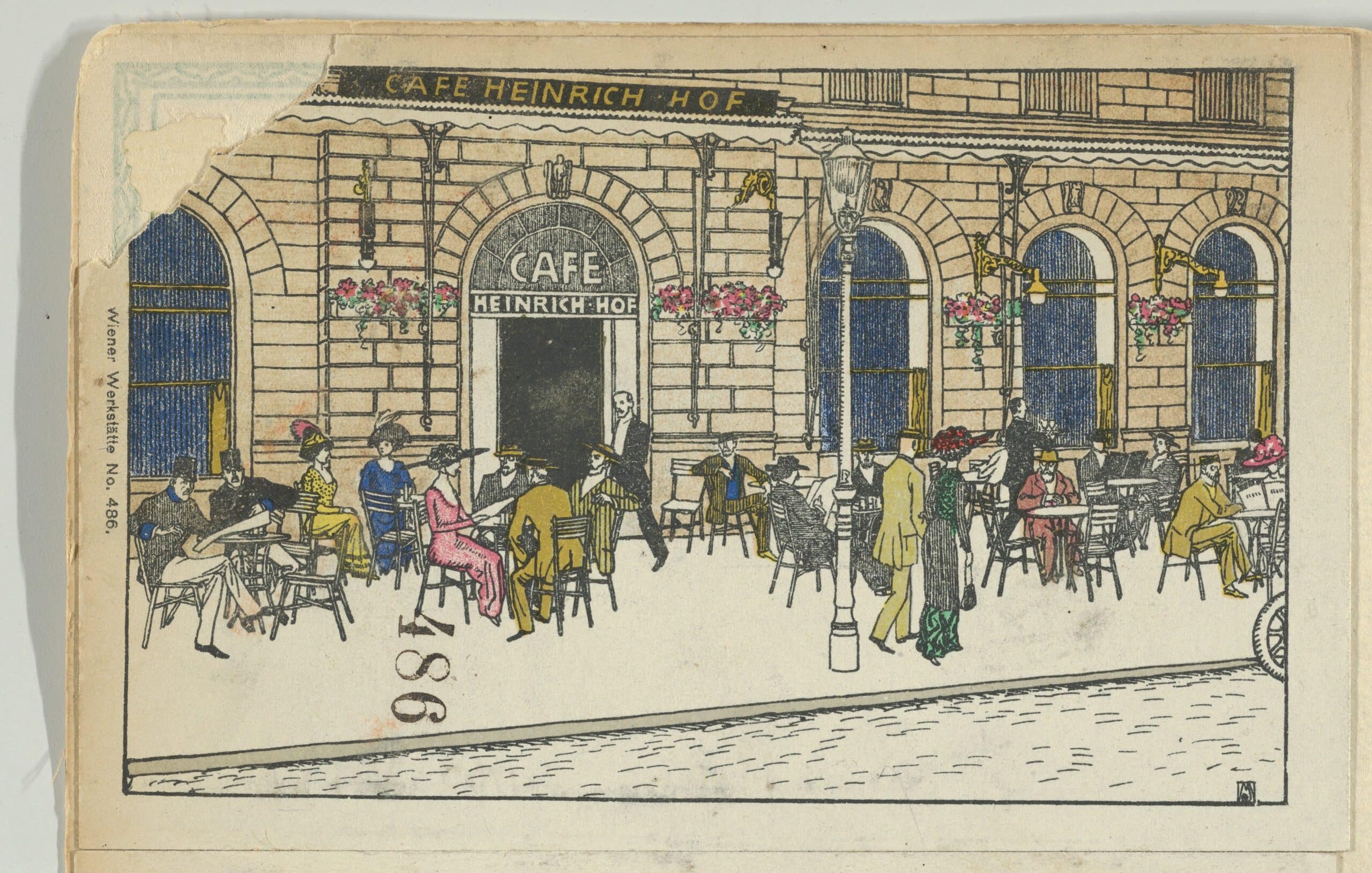
Cafe Heinrichhof, Vienna, 1912. Moriz Jung.
One of the psychologists was the young Bluma Zeigarnik, who did her dissertation on the effect the waiters displayed. No, she did not do her dissertation by hanging out in coffee houses. (Nice idea, though – are you a grad student by any chance?)
Zeigarnik gave experimental subjects various tasks like puzzles, math problems, or stringing beads. Some subjects were interrupted in the middle of what they were doing. An hour later she asked people what their task had been. Those who had been interrupted were twice as likely to remember the task as those who were allowed to finish the thing.
She formulated her findings as “Unfinished tasks are remembered approximately twice as well as completed ones.” (Actually, she wrote “Die unerledigten Handlungen werden besser, und zwar durchschnittlich nahezu doppelt so gut behalten wie die erledigten.”)
(Zeigarnik’s biography is tumultuous and tragic. In hindsight, the Zeigarniks’ move to Moscow may have been ill-advised.)
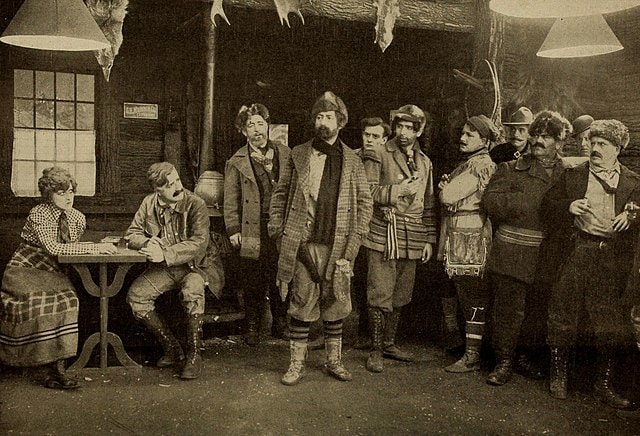
A bunch of the boys were whooping it up in the Malamute Saloon, when they suddenly noticed an odd phenomenon.
While the Zeigarnik Effect is well-known, and often referenced, experimenters sometimes cannot replicate the effect. We suspect this may be because they’re giving people tasks that are just too boring to care about finishing. (Ooh – why not open a fake cafe?)
Here’s how SorryWatch sees the Zeigarnik Effect relating to apologies. If you messed up somehow, and it still weighs on you, or bugs you when you wake up at four a.m., it might be because that mess is unfinished. Still hanging there. An apology can turn that regrettable episode into a finished one, and let you stop wincing at the memory.
It might even stop being a memory. Sumac knows this from past events she wanted to write about for SorryWatch, but can no longer remember well enough. Once she said a stupid thing, meant as a joke (uh huh). It kept bothering her until she invited Nicole to lunch and apologized. It stopped bothering her so completely that now she can’t remember the stupid thing she said. Damn it! That would’ve been perfect for SorryWatch. Probably.
On the one hand, thank you, Doctor Zeigarnik! One less thing to regret during sleepless nights. On the other hand, Bluma – can I please get my memory back?
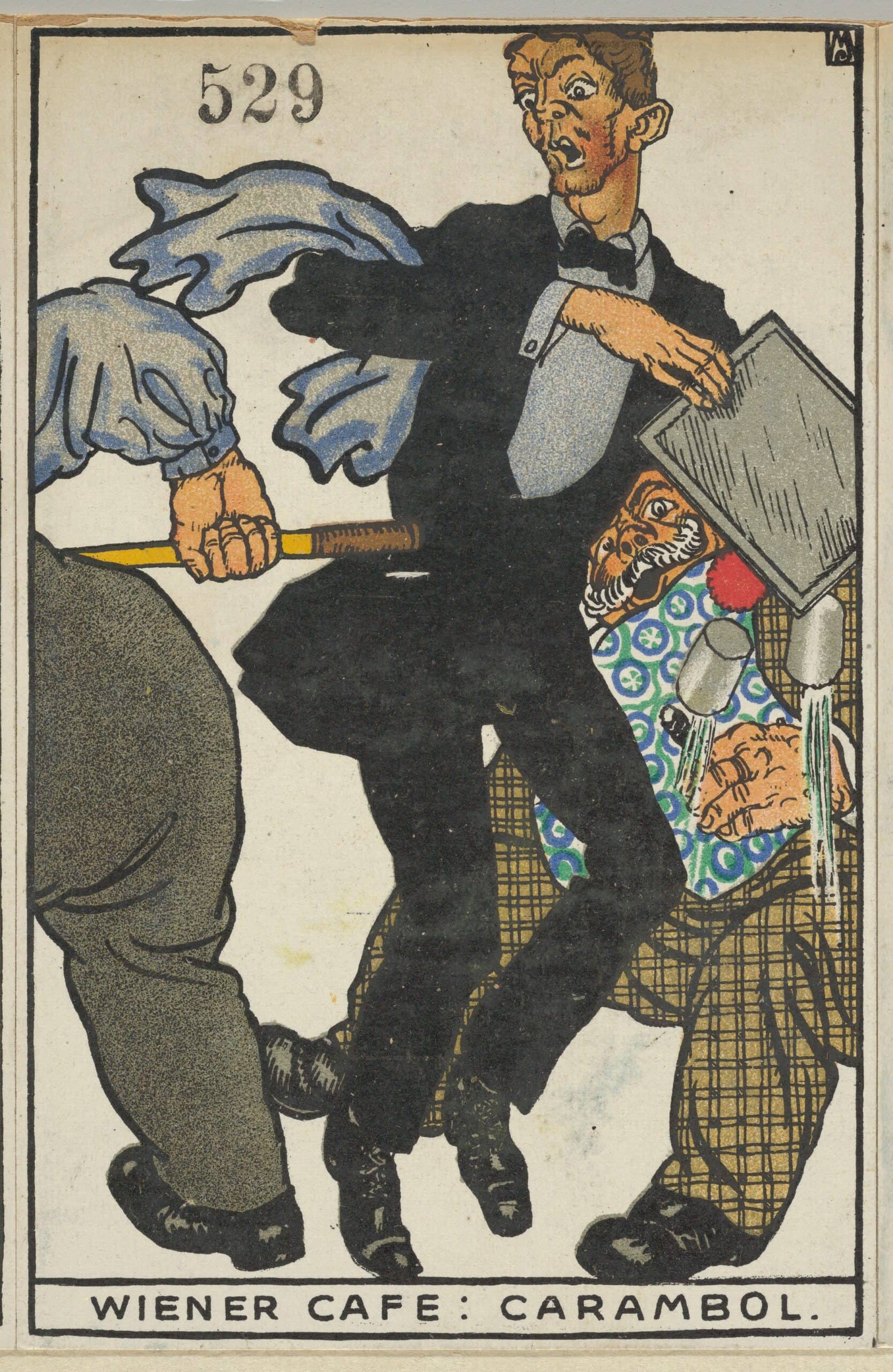
Being waitstaff: harder than people often realize.
On another occasion, Sumac offended a family member, who continued to resent her insensitivity. Sumac finally realized that she was at fault. She apologized and had her apology accepted. Much later, it occurred to Sumac to write it up for SorryWatch, but she couldn’t remember what she’d done. She asked the family member, and they didn’t remember either.
That’s kind of amazing – a grudge that was forgotten! Eventually, an outside source reminded Sumac of what she’d done, and she was able to write it up.
Maybe we all see this in our lives. We can’t promise you a clear conscience in all domains, but sometimes an apology or two can help with insomnia.
Image Credits: Photo: Andrey Zeigarnik. https://www.flickr.com/photos/azeigarnik/48594447977/ Public domain. , Moriz Jung (Wiener Workstätte). https://www.metmuseum.org/art/collection/search/649822 Public domain., Image: Alfred Ortlieb/Herbert Blaché. Still from The Shooting of Dan McGrew (1915). Public domain.Still from The Shooting of Dan McGrew (1915)., Moriz Jung (Wiener Workstätte). https://www.metmuseum.org/art/collection/search/649914 Public domain.