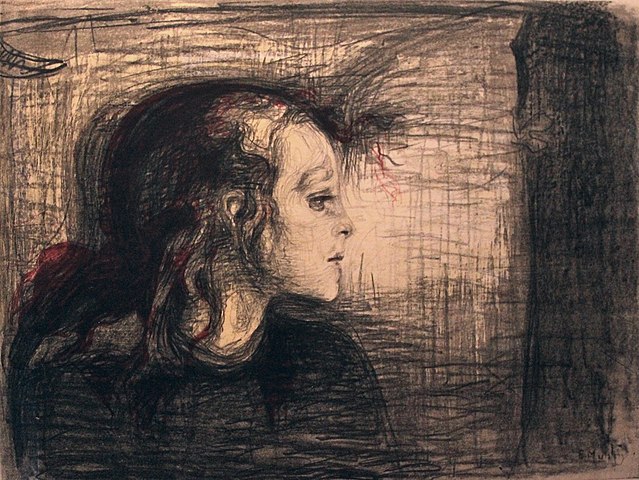
There’s a haunting account in the psychoanalytic literature of a child who asked for apologies. A 1955 Psychoanalytic Study of the Child article tells of a four-and-a-half-year-old admitted to the New York Neurological Institute. Gaunt and pale, a few weeks earlier she had stopped eating and speaking. She refused to be in bed, huddling in a corner with her face to the wall. “[S]oon she began to wet and soil as she lay mute and unresponsive.”
At the Institute her behavior was similar. Sometimes she muttered or hummed rhythmically.
A few days after admission, she was the subject of a case conference attended by many staff. She was rolled into the room in a crib. She sat staring. She made no response when the examiner put an arm around her or asked her name. After a few minutes, she began muttering. The examiner asked a nurse if she had ever been able to make out any words. The nurse said she’d once thought the child was chanting, “Say you’re sorry.”
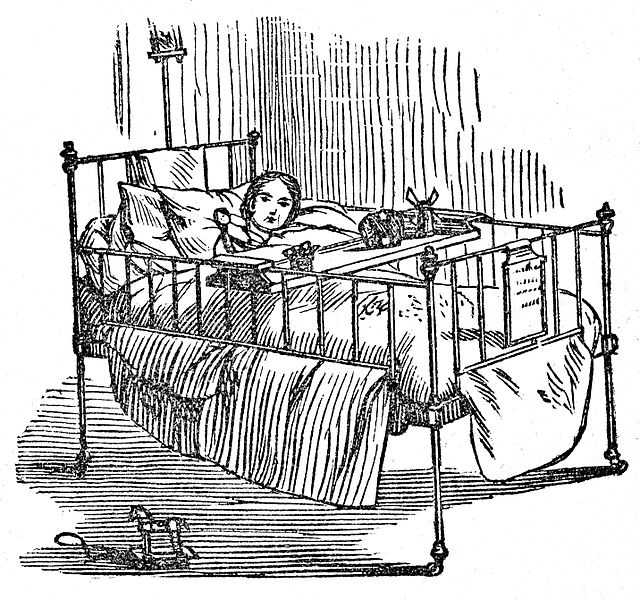
Child’s hospital cot, Great Ormand Street & Bristol.
When she said this, the child looked at the nurse, then stared at the examiner. He took her hand, and seriously said, “I am sorry. I am very very sorry.” The child looked at the staff member standing next to him and spoke. Clearly. “Say you’re sorry.”
“I am sorry, too,” he said. She turned to each doctor in the front row and said, “Say you’re sorry.” Each one did. She started asking them their names, told them hers, and happily accepted a piece of candy.
She improved rapidly, and went home.
She was brought to the Institute for weekly therapy sessions. Her initial reaction was “excellent; but she then went successively through a long series of reactivated earlier phobias about contacts and smells, with related compulsive avoidance rituals.” Her mother was also pressured to come for weekly therapy.
The article says that the child’s “crisis” had come after a day when her father, tired and annoyed, lost his temper and spanked her.
The article “does not pretend to tap deep layers of analytical data or insights.” The saying sorry is referred to as a “verbal symbol” from an “unconscious constellation,” whose effect was “instantaneous and almost magical.” They describe the incident as a “demonstration of the appearance and disappearance of a psychotic state in childhood out of a neglected pre-existing neurosis. …that this malignant process was caught in time to be reversible was the happy outcome of a moment of exceptional clinical good fortune…”
Well, then.
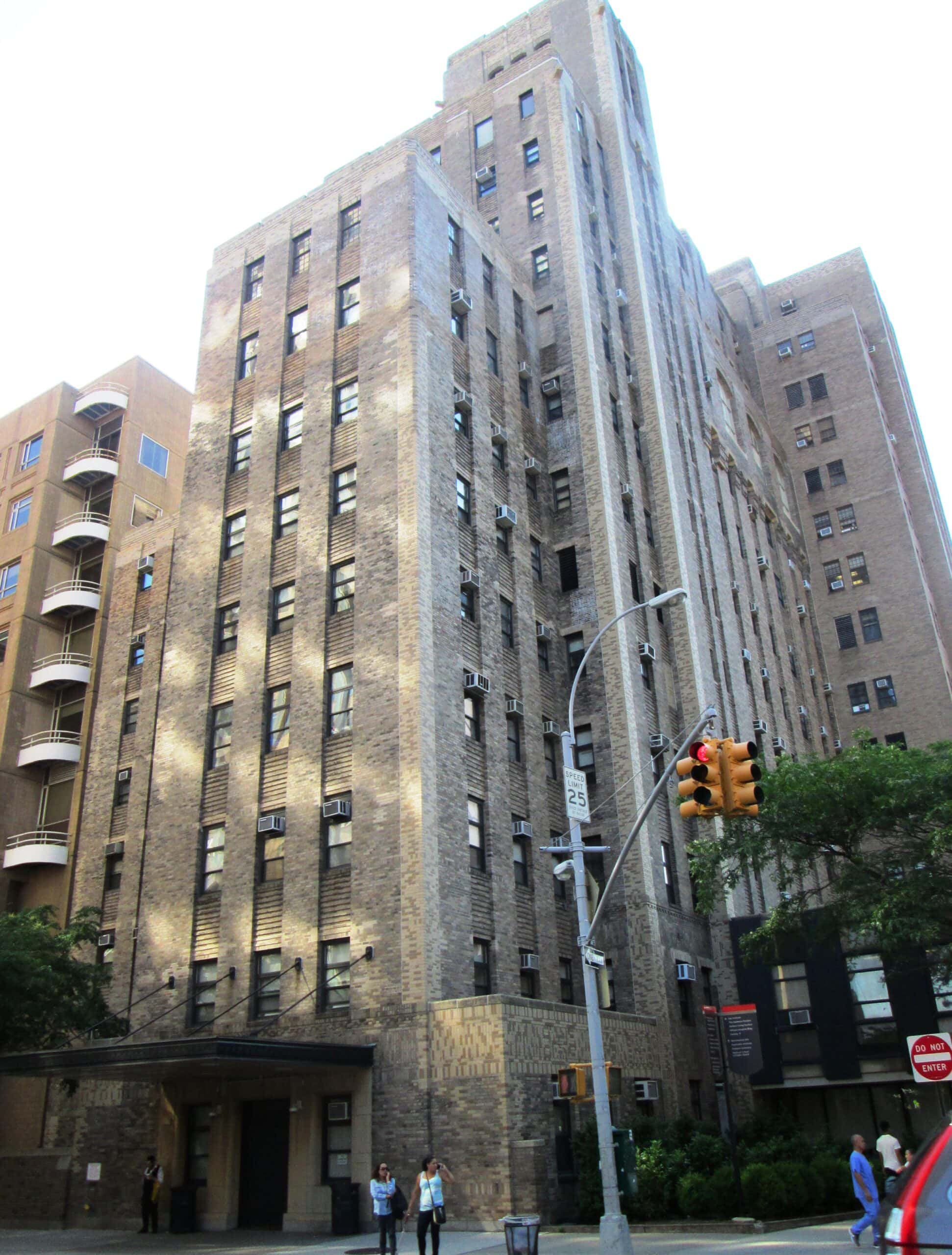
New York Neurological Institute. Pretty sure this is the place.
Ten years later, a follow-up article in the American Journal of Psychotherapy, by different authors, offered more explanation. Six years on, the child was hospitalized again. She was violent, set fires, insisted she be called a boy’s name, said she might cut herself, eavesdropped on phone calls, and generally appalled and frightened the family.
After months of therapy, it was at last learned that when the child was very small, shortly after she began to walk, her parents decided the child was too constipated. They didn’t consult a doctor, but began giving her enemas every few days, which the child fought savagely. It took both parents to overpower her. This went on for three years – which seems to take us up to the time the child was first locked up after her “psychotic” crisis. Somehow, the parents never mentioned it to clinicians when asked about toilet training.
The second hospitalization seems to have been set off by an incident when the child’s day camp was scheduled to have a sleepover. Half an hour after arrival, the kid became hysterical and uncontrollable and had to be taken away. Much later, it turned out she’d spotted an enema bag in a counselor’s suitcase.
When the therapists finally learned about what they termed “the battle of the enemas,” they initiated sessions with child and mother and then the whole family over a month’s time. “The patient was allowed to introduce the topic of the enemas at her own time, and did so….” By the end of the month “all of the intense feelings surrounding it had disappeared.”
The authors of the second article go more directly to the subject of the apologies demanded. “Being ‘sorry’ can… be understood to have multiple meanings.” They say she felt sorry for her own behavior. “Moreover, she demanded that her parents should be sorry for deceiving her, surprising her, bribing her, and repeatedly invading the privacy of her body. By extension, she was unable to trust anyone…”
That was a hell of a way to treat a tiny kid. Today it’s called abusive. The articles aren’t fun reading, and the psychoanalytic interpretations might also be… dated. But the opening scene of the story touches the heart. The angry, despairing child was freed from self-destructive misery by a room full of strangers apologizing to her. There is a fleeting magic there.
Image Credits: Image made by Dr. Alexey Yakovlev. Creative"The Sick CHild" painting by Edvard Munch. Commons Attribution-Share Alike 2.0 Generic license., Wellcome Images. Creative Commons Attribution 4.0 International license. https://wellcomecollection.org/search/images?query=kwspfzdx , Photo: Beyond My Ken. GNU Free Documentation License, Version 1.2 or later.